Succulent & Cacti Bowl: Complete Design Guide

VC2606004

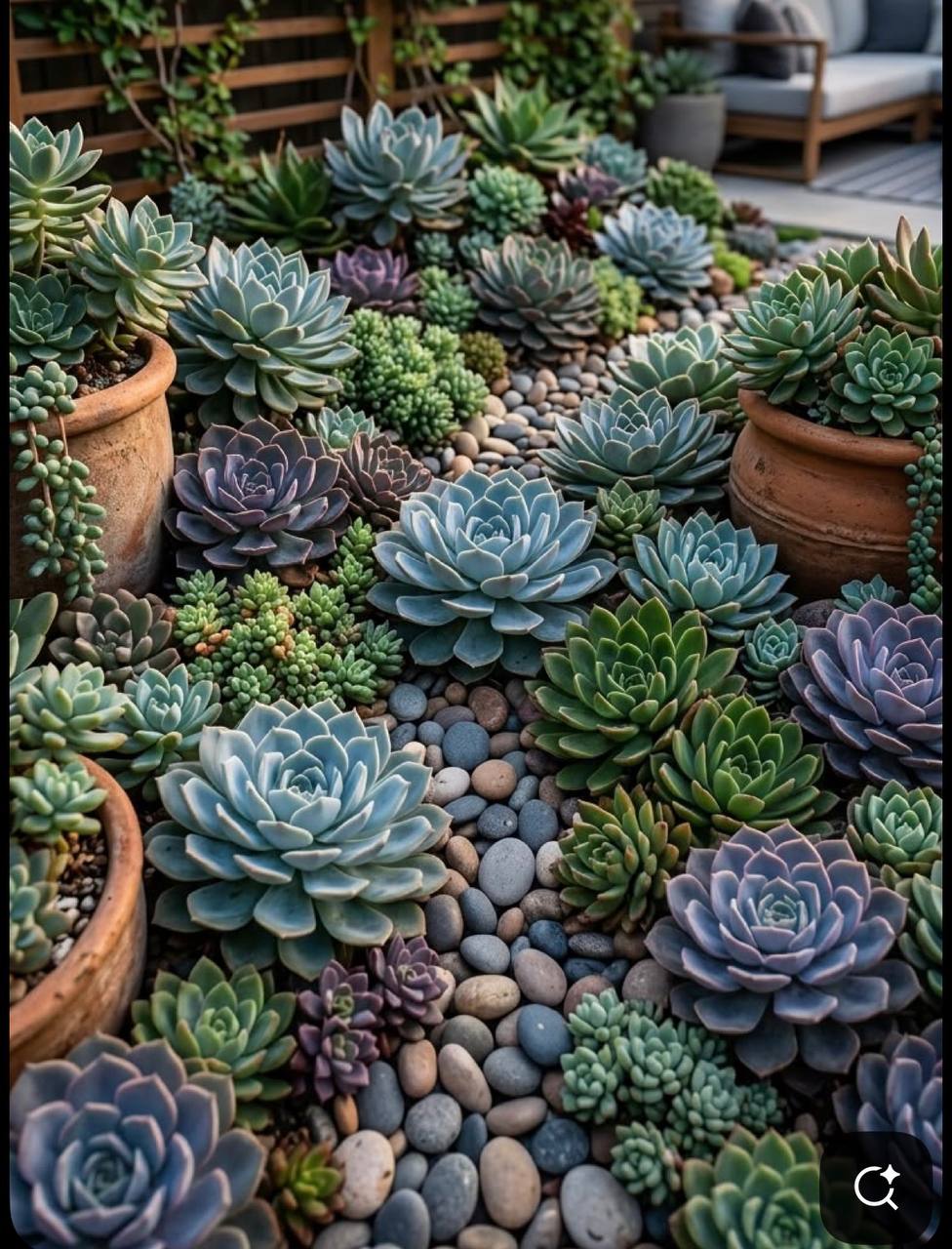
Vibrant succulent garden with blue-green echeverias, purple sempervivums arranged with smooth pebbles in a lush outdoor planter

1 Design Story

Succulents and cacti bring a sculptural elegance to front porch planters that no other plant can match. Their architectural forms, varied textures, and jewel-tone colors create a living sculpture that thrives on neglect — perfect for hot, sunny porches where other plants would wither.

Detail view of the planter composition — leaf textures up close Side-view layer sketch — planter height structure

A succulent bowl is the ideal solution for south-facing porches, homeowners who travel frequently and can't water daily, and anyone who wants a planter that looks great year-round with minimal effort. Unlike flowering annuals that need deadheading and constant care, succulents just sit there looking good.

2 The Structure — Why This Works

The key to a successful succulent arrangement is creating distinct height layers — a tall structural element in the center or back, medium rounded forms around it, and trailing elements spilling over the edge. The contrast between round, spikey, and trailing forms is what creates visual interest.

The Golden Barrel Cactus provides the bold structural anchor with its perfectly round form and golden spines. Echeveria rosettes add soft rounded shapes in pale lavender-pink. Aeonium 'Zwartkop' brings dramatic dark purple-black color that anchors the arrangement. Sedum burrito cascades over the rim, softening the hard edges of the terracotta bowl.

3 Plant Selection

Echeveria Perle von Nürnberg succulent

Echeveria 'Perle von Nürnberg'

Role: Soft Rosette Accent

Pale lavender-pink rosettes with powdery farina coating. One of the most beautiful echeverias, it forms tight rosettes up to 6 inches across. Protect from heavy rain which can wash off the farina.

Golden Barrel Cactus Echinocactus grusonii

Golden Barrel Cactus

Role: Structural Focal Point

Globular cactus with golden curved ribs and sharp yellow spines. Grows slowly to 12-18 inches tall. Requires full sun and very infrequent watering. The spiky texture contrasts beautifully with soft succulents.

Sedum burrito Burro's Tail succulent

Sedum burrito (Burro's Tail)

Role: Trailing Spiller

Overlapping bead-like pale blue-green leaves on trailing stems that can reach 2-3 feet. Extremely drought-tolerant. Handle with care — the leaves fall off easily.

Aeonium Zwartkop black rose succulent

Aeonium 'Zwartkop'

Role: Dark Color Anchor

Branching dark purple-black rosettes that can reach 8 inches across. The dramatic dark color provides essential contrast against pale succulents. Goes dormant in summer heat — water less.

4 Care & Maintenance

  1. Water deeply only when soil is completely dry — every 10-14 days in summer, once a month or less in winter. Use a moisture meter to be sure.
  2. Place in full sun (6+ hours daily). Succulents grown in too little light become leggy and lose their compact shape.
  3. Use a shallow, wide pot with drainage holes. Succulents have shallow roots and deep pots stay wet too long.
  4. Fertilize once in spring with a low-nitrogen succulent fertilizer at half strength. Too much fertilizer causes leggy growth.

5 Design Tips

  1. Use coarse sand or gravel as a top dressing — it prevents soil splash during watering and sets off the succulents visually.
  2. Leave 2-3 inches of space between plants for airflow. Succulents rot quickly if they're packed too tightly without air circulation.
  3. Incorporate at least one dark-colored succulent for contrast. All-pale arrangements look washed out in bright sun.
  4. Rotate the bowl weekly to prevent succulents from leaning toward the light and losing their symmetrical shape.

6 Common Mistakes

  1. Overwatering — by far the #1 killer of succulents. Wait until the soil is bone dry and the leaves show slight wrinkling before watering.
  2. Using regular potting soil — it holds too much moisture. Always use a gritty cactus mix with plenty of perlite or pumice.
  3. Choosing all slow-growing succulents — the arrangement will look sparse for months. Mix in one faster grower to fill space quickly.
  4. Putting a succulent bowl in the shade — they need full sun to maintain their compact shape and vibrant colors.

7 Real vs. Faux: What to Buy

Echeveria Real Real echeverias develop beautiful natural farina and subtle color variations that faux versions can't replicate. They're cheap and easy to propagate from leaf cuttings.
Golden Barrel Cactus Real A real barrel cactus has natural imperfections, woolly crowns, and real spines that create beautiful shadows. Faux cacti look obviously fake up close.
Sedum burrito Faux Real sedum burrito leaves fall off at the slightest touch. For a front door planter that gets brushed against, high-quality faux sedum is a practical choice.
Aeonium 'Zwartkop' Real The dramatic dark color and branching structure are hard to fake convincingly. Real aeoniums are easy to grow and propagate.

FAQ

How often should I water a succulent bowl?

Only when the soil is completely dry — every 7-14 days in summer, once a month in winter. Use a wooden skewer to test: if it comes out clean, it's time to water.

Do succulents need full sun?

Most succulents need 4-6 hours of bright light, preferably morning sun. Too much intense afternoon sun can scorch the leaves; too little light causes stretching.

What kind of soil should I use?

Gritty cactus mix with 50% added perlite or pumice. Regular potting soil holds too much moisture and will rot the roots quickly.

Can I leave succulent bowls outside in winter?

Only if you live in Zone 9 or warmer. Most succulents are not frost-hardy. Bring them indoors or to a sheltered spot when temperatures drop below 40°F.